Diving the Baltic Sea Off Estonia: Wrecks, Visibility & Cold-Water Tips
Explore Baltic Sea diving off Estonia's coast: preserved shipwrecks near Saaremaa and Hiiumaa, seasonal visibility, and the cold-water gear you'll need.
Diving the Baltic Sea Off Estonia: Wrecks, Visibility & Cold-Water Tips
The Baltic Sea rarely makes anyone's list of dream dive destinations, and on paper it is easy to see why: cold water, modest visibility, and a short season. Look past those numbers and Estonia's stretch of the Baltic holds one of the densest concentrations of preserved shipwrecks anywhere in Europe. This guide covers what open-water diving off the Estonian coast actually involves, where the best wreck sites are, and how to prepare for genuinely cold-water conditions.
If you have not read it yet, our Diving in Estonia pillar guide covers the country's dive scene as a whole, including Rummu quarry, which pairs well with a Baltic Sea trip. For how these sites sit against warmer European wrecks, see best wreck diving in Europe.
What Makes Baltic Sea Diving Different
Two things define diving in the Baltic: salinity and temperature. The Baltic is one of the largest brackish seas on the planet, diluted by huge river inflows from Scandinavia, the Baltic states, Poland, and Russia, and only weakly flushed by ocean water through the narrow straits near Denmark. Salinity off the Estonian coast typically sits at a fraction of full ocean salinity, which affects buoyancy and slows the biological decay processes that break down wood and metal in warmer, saltier seas.
That combination of cold, low-oxygen, low-salinity water is exactly why the Baltic is famous among wreck divers. Wooden sailing ships that would have disintegrated in the tropics within decades can remain remarkably intact after a century or more. Shipworm, the organism responsible for destroying wooden wrecks in most of the world's oceans, cannot survive in the Baltic's low salinity, so wooden hulls, masts, and even rigging can survive in a way they simply do not elsewhere.
Cold is the other half of the equation. Even in peak summer, Baltic water off Estonia rarely approaches the temperatures divers associate with a warm-water holiday, and it drops off quickly with depth. That combination of preservation and cold is what separates Baltic wreck diving from almost anywhere else: sites that look barely touched by time, in water that never lets you forget where you are.
Best Time and Conditions for Baltic Sea Diving in Estonia
June through September is the practical window for open-water diving in Estonia. Surface temperatures peak in the 15-19°C range in high summer, dropping quickly as you descend into deeper thermoclines. Outside that window, water turns cold enough that only committed drysuit divers are typically diving the open sea.
Visibility is the trade-off for the Baltic's wreck-preserving conditions. Nutrient-rich water supports plankton blooms that can cut visibility to a few metres in summer, particularly close to shore. Many experienced local divers actually prefer the shoulder seasons or the depths below the thermocline, where reduced biological activity can mean noticeably clearer water than a summer surface swim would suggest. Ask your dive centre what conditions have been like in the two weeks before your trip, since the Baltic can shift quickly with wind and current.
Wind and sea state matter more here than at a sheltered tropical destination. The open straits around Saaremaa and Hiiumaa can turn choppy quickly, and operators will reasonably cancel or reschedule boat trips rather than run in marginal conditions. Building a buffer day or two into your itinerary, rather than scheduling a single boat trip on a tight timeline, makes for a much less stressful visit.
Top Wreck Sites Off Saaremaa and Hiiumaa
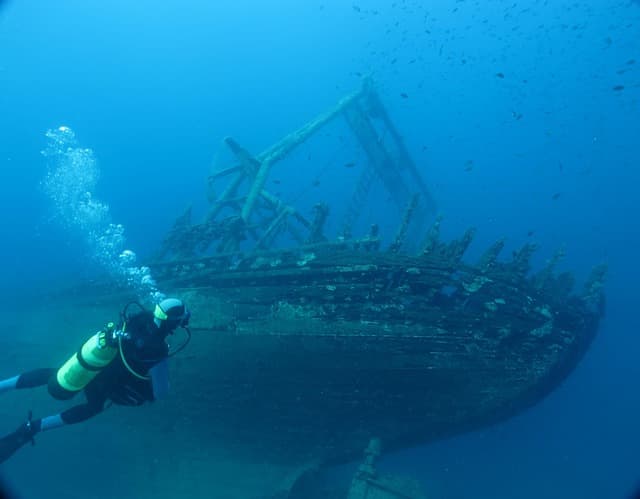 Image by Martin Str, Pixabay
Estonia's two largest islands, Saaremaa and Hiiumaa, sit in the middle of some of the busiest historical shipping lanes in the Baltic, and the straits around them are scattered with wrecks from sailing-era trade, both World Wars, and the interwar period.
- Altair — lost between Hiiumaa and Saaremaa in October 1917, Altair is considered one of the best-preserved and most accessible wreck sites in Estonian waters, suitable for divers with reasonable wreck experience. Site buoys are maintained through the diving season.
- E. Russ — an English-built steam freighter that struck a floating mine north of Hiiumaa in September 1919 and sank within minutes, with the entire crew surviving. The wreck lies broken but substantially intact at roughly 24-36 metres, which puts it toward the deeper, more advanced end of Estonian wreck diving.
- Akula — a vessel built in Saint Petersburg in the early 1900s, lost after hitting a mine in November 1915. Like most of the region's wrecks, it sits as a reminder of just how much history the Baltic seabed is quietly holding onto.
These are historic and, in some cases, protected sites. Local regulations on maritime heritage sites in Estonia can restrict penetration or artefact removal, so always dive wrecks with an operator who knows the current rules for that specific site. (Remember that the 1994 cruise ferry MS Estonia is strictly off-limits under international law — see our explainer on the MS Estonia wreck diving ban.) Beyond these three, Estonian and Nordic technical diving groups have documented a long list of further wrecks around the islands and along the mainland coast; a well-connected local operator will often have access to sites that never appear in general travel write-ups.
Shore Diving vs Boat Diving in Estonia
Some coastal sites near Tallinn and around the islands are accessible directly from shore, which keeps costs down and makes for an easy way to fit in a dive between other travel plans. The more interesting wreck sites, however, sit further offshore in the straits around Saaremaa and Hiiumaa and require a boat charter arranged through a local operator.
If wreck diving is the priority for your trip, basing yourself on Saaremaa or Hiiumaa rather than mainland Tallinn cuts down significantly on boat transit time to the best sites. Shore dives near Tallinn are a reasonable way to get a feel for Baltic conditions, current, and visibility before committing to a longer boat trip further out, and several operators offer exactly that as an orientation dive for visitors who have not dived the Baltic before.
Technical Diving Opportunities
Because so many of Estonia's most significant wrecks sit at depths beyond standard recreational limits, the country has a genuine, if niche, technical diving scene built around them. Deeper sites in the straits around Saaremaa and Hiiumaa, along with wrecks further offshore, are regularly visited by trimix and extended-range divers, often as part of ongoing survey and documentation work rather than pure tourism. If you already hold technical certifications, it is worth contacting operators directly, since many of the most interesting deeper sites are arranged informally rather than sold as standard trip packages.
Marine Life in the Baltic
Do not expect tropical biodiversity. The Baltic supports a smaller range of marine life than a warm ocean, shaped by low salinity and cold temperatures, but it is far from empty. Grey seals and ringed seals are regularly seen around the islands, along with cold-water fish species, sea stars adapted to brackish conditions, and dense growths of bladderwrack and other algae on shallow rocky reefs. For many divers, the wrecks themselves, encrusted with mussels and sponges after decades underwater, are the real marine-life highlight.
Seal encounters in particular are one of the more pleasant surprises of diving here. Seals around Saaremaa and Hiiumaa are curious and often approach divers and boats, especially away from the busiest access points, giving Baltic diving an unexpected wildlife dimension that its reputation as a wreck-only destination does not usually credit it with.
Gear and Certification You'll Need
A drysuit is close to mandatory for open-water diving in Estonia outside the height of summer, and strongly recommended even then. Pair it with a hood, drysuit gloves, and a cold-water-rated regulator to avoid free-flow issues. If your certification history is mostly warm-water diving, an Advanced Open Water certification combined with some cold-water or drysuit-specific experience will make Baltic wreck diving far more comfortable, particularly on the deeper sites like E. Russ.
For anyone still working toward foundational certification before attempting Baltic conditions, our guides to scuba diving equipment for beginners and scuba diving safety are worth reading well before you book a Baltic trip.
Estonia Compared to Other Baltic Diving Countries
Estonia is not the only country diving this sea. Finland and Sweden both have active Baltic wreck-diving communities of their own, and in some cases divers cross borders specifically to reach a particular site. What sets Estonia apart is density and access: a relatively compact coastline packed with historically significant wrecks, paired with Rummu quarry as an inland alternative that neither Finland nor Sweden has an equivalent for. If you are already planning a Nordic or Baltic diving trip more broadly, Estonia is a natural stop rather than a destination that requires a dedicated trip on its own.
Final Thoughts
Baltic Sea diving off Estonia is not about warm water or vibrant coral. It is about wrecks that have survived in a state most of the world's oceans could never preserve, spread across some of Europe's least-dived waters. Pair a few days of wreck diving around Saaremaa or Hiiumaa with a visit to Rummu quarry and you get a genuinely complete picture of what Estonian diving offers.
Frequently Asked Questions
- How deep are the wrecks off Saaremaa and Hiiumaa?
- It varies by site. Some lie in relatively shallow water accessible to divers with moderate experience, while others, like the E. Russ, sit between roughly 24 and 36 metres and are better suited to divers with solid wreck and deep-diving experience.
- Why are Baltic Sea wrecks so well preserved?
- The Baltic's low salinity keeps out shipworm, the organism responsible for destroying wooden wrecks in most of the world's oceans, while cold, low-oxygen water slows corrosion and decay generally. Wrecks that would have disintegrated elsewhere can remain remarkably intact for a century or more.
- Is Baltic Sea diving suitable for beginners?
- Some shallow coastal sites are manageable for newer divers with proper cold-water preparation, but the best-known wreck sites generally suit divers with more experience, particularly in cold water and drysuit use. Beginners are usually better served starting at Rummu quarry before attempting open-water Baltic dives.
Related articles
- Diving in Estonia: The Complete Guide (2026)
From the flooded Rummu prison quarry to cold Baltic Sea wrecks, discover everything you need to know about diving in Estonia in 2026.
- MS Estonia Wreck Diving: Why It Is Banned, Depth & Legal Baltic Wrecks
Can you scuba dive the MS Estonia shipwreck? Learn why the 1994 ferry wreck at 74–85m is protected by an international grave treaty and which Baltic wrecks you can legally dive.
- Rummu Quarry Diving: Estonia's Underwater Prison Guide
Dive Rummu quarry, Estonia's flooded Soviet-era prison site: history, depths, visibility, getting there, and safety tips for exploring the ruins.
- Best Dive Centers and Operators in Estonia: 2026 Guide
Find the right dive center in Estonia, from Tallinn shops running Rummu quarry trips to island operators for Baltic Sea wreck diving near Saaremaa.
- Scapa Flow Wreck Diving: Orkney's German Fleet Guide
Dive Scapa Flow in Orkney: German battleships and cruisers scuttled in 1919, 12–47 m, cold water, June–September. Advanced Open Water is the realistic minimum.