PADI Liveaboard Diving: The Best Destinations Worldwide
Discover what liveaboard diving really involves, who it suits, and the world's top destinations for a PADI liveaboard trip — from Raja Ampat to Socorro.
PADI Liveaboard Diving: The Best Destinations, Courses & Costs Worldwide
On a PADI liveaboard, you live aboard a purpose-built dive yacht for several days, log three to five dives a day, and wake up anchored over remote reefs, atolls, and wrecks that day boats can never reach. No daily hotel transfers, no hauling wet gear in and out of vans, and no wasted surface intervals.
If you've been planning a dive trip and want to maximise your time underwater — or complete your Advanced Open Water or Enriched Air Nitrox certification while logging 20+ dives in a single week — a liveaboard is often the best value per dive in scuba.
However, liveaboard diving is not for everyone, and going in with realistic expectations will make or break the experience. Let's cover how a PADI liveaboard works, what certification and logged dives you need, which courses you can take onboard, how much trips cost, and the best liveaboard destinations worldwide.
What Is a Liveaboard in Diving?
A liveaboard is a vessel purpose-built (or converted) for multi-day dive trips. Passengers sleep, eat, and dive from the same boat. Trips typically range from three nights to two or three weeks, depending on the destination and route.
The key difference from day-boat diving is access. Day boats operate out of a port and return each evening, which limits where they can go. A liveaboard can navigate to remote reefs, offshore seamounts, and marine parks that no day tripper will ever see. That's the whole point.
Boat types vary significantly:
- Budget: Converted fishing or cargo vessels with basic shared cabins and bathrooms.
- Mid-range: Ensuite cabins, a proper dive deck, and nitrox fills.
- Luxury: Air-conditioned suites, fine dining, and camera rinse stations.
The diving is often the same; the comfort is not.
What Certification Do You Need for a Liveaboard?
Most liveaboards require at minimum a PADI Open Water Diver certification (or equivalent from SSI, NAUI, or another agency). That covers you to a maximum depth of 18 metres.
In practice, the majority of liveaboard routes — especially in Southeast Asia, the Maldives, and the Socorro Islands — routinely reach 25–30 metres. Many operators explicitly require an Advanced Open Water certification for these trips, and even those that don't will expect you to be a comfortable, experienced diver.
If you have fewer than 20 logged dives, you'll get more out of a liveaboard after spending a week doing guided dives from shore first. Skills like buoyancy control, air management, and staying with a group matter much more when you're three hours from the nearest port.
For specialty liveaboards — technical diving, rebreather trips, shark expeditions — additional certifications are mandatory. Check the operator's requirements before booking.
Taking PADI Courses Onboard a Liveaboard
One of the most common reasons divers search for a PADI liveaboard is to upgrade their qualifications while on safari. Almost every mid-range and luxury vessel has PADI Instructors on staff and offers:
- PADI Advanced Open Water Diver: Complete your 5 Adventure Dives (Deep, Underwater Navigation, plus electives like Drift, Night, or Wreck) seamlessly across the first two days of your itinerary without missing a single boat dive.
- PADI Enriched Air (Nitrox) Specialty: The single most useful specialty on a liveaboard. When you are diving four times a day for a week, breathing 32% Nitrox gives you substantially longer no-decompression limits on repetitive dives.
- PADI Wreck Diver or Deep Diver: Especially popular on Red Sea northern wreck safaris (SS Thistlegorm and Abu Nuhas).
Tip: Complete your PADI eLearning theory and practice quizzes at home before boarding so your surface intervals on the sun deck stay relaxing.
How to Choose a Liveaboard: What to Look For
Trip duration. Three to four nights suits most first-timers. Seven nights or more is where you start covering serious ground and racking up 20+ dives. Two weeks is for the dedicated.
Group size. Smaller boats (8–12 divers) feel more personal and typically surface fewer divers at the same site simultaneously. Larger boats (20–30 divers) can be more social and often cheaper per night.
Dive profiles. Look at the route. How many dives per day? Are night dives included? What's the maximum depth? Is there a house reef or is every dive a guided excursion? These details separate an average trip from an exceptional one.
Nitrox availability. Many liveaboards offer nitrox (enriched air) for free or a small surcharge. If you're certified, it extends your bottom time and reduces fatigue on multi-dive days. Worth asking about.
Skill level matching. Some boats cater specifically to beginners, others to advanced or technical divers. Booking a beginner-focused trip with 200+ dives of experience is dull. Booking an advanced trip as a newly certified diver is unsafe.
Solo travel. Most liveaboards pair solo travelers with a buddy — this is standard. Single supplements for private cabins exist on some boats. If traveling alone, check the cabin arrangement before you commit.
The Best Liveaboard Destinations in the World
Southeast Asia
Southeast Asia has the highest density of quality liveaboard routes on the planet. Raja Ampat in West Papua, Indonesia, is widely considered the most biodiverse marine ecosystem on earth — schools of fish so dense they block the sun, pygmy seahorses, and manta rays circling cleaning stations. Komodo offers strong currents, Komodo dragons on shore, and some of the best macro diving anywhere. Tubbataha Reef in the Philippines is a UNESCO World Heritage Site accessible only by liveaboard from April to June, with hammerheads, whale sharks, and pristine hard coral.
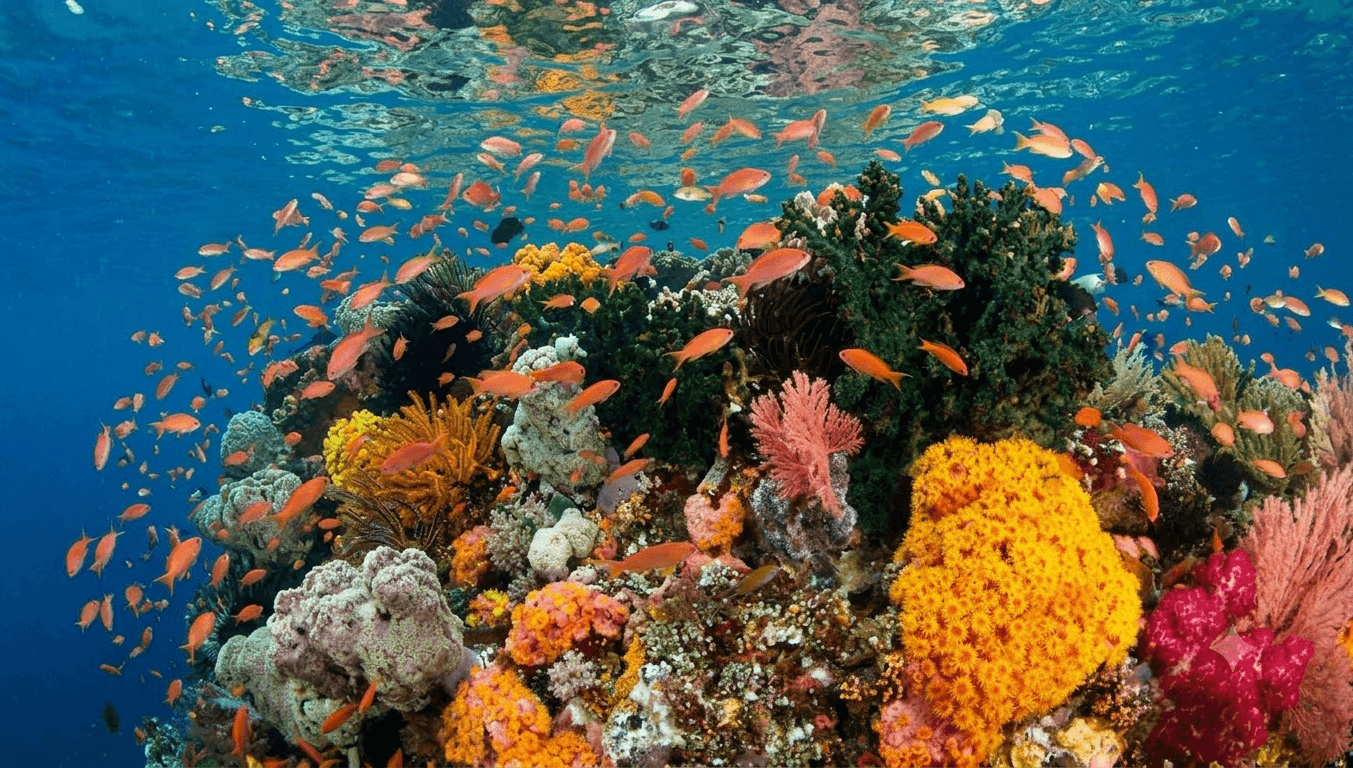 Image by Raja Ampat, Indonesia
For a deeper look at specific operators and routes, see our guide to liveaboards in Southeast Asia.
Asia (Maldives and Mergui)
The Maldives is a classic liveaboard destination. The atolls are spread over 900 kilometres of ocean, and the only practical way to cover multiple atolls is from a boat. Manta aggregations in the North Malé Atoll, thresher sharks in the outer atolls, and whale shark encounters in the south are all seasonally predictable.
The Mergui Archipelago in Myanmar is less trafficked and increasingly popular for that reason. Isolated reef systems, healthy soft coral, and a genuine sense of remoteness — without the crowds of better-known routes. Read our dedicated Myanmar & Mergui Archipelago liveaboard guide or see our broader guide to liveaboards in Asia for operator recommendations and seasonal timing.
Australia (Great Barrier Reef and Coral Sea)
The Great Barrier Reef liveaboard scene centres on Cairns, with routes running north to the Ribbon Reefs and Osprey Reef in the Coral Sea. Osprey Reef in particular — a remote seamount rising from deep water — is reliably visited by reef sharks, hammerheads, and passing pelagics. Minke whale encounters happen seasonally on the outer ribbon reefs between June and July.
Mexico (Socorro Islands)
The Socorro Islands in the Pacific, roughly 400 kilometres southwest of Cabo San Lucas, are the liveaboard destination for big animal encounters. Giant Pacific manta rays approach divers out of apparent curiosity. Silky, Galapagos, and hammerhead sharks are routine. Humpback whales pass through between January and March. This is a blue-water, current-exposed destination — not for anxious or inexperienced divers, but unforgettable for those ready for it.
How Much Does a Liveaboard Cost?
Prices are quoted per person per night and vary enormously by region and vessel quality.
Budget ($100–$180/night): Basic shared cabins, shared bathrooms, simpler meal options. Common in Thailand, Indonesia, and Egypt. You're paying for the diving, not the accommodation.
Mid-range ($180–$350/night): Ensuite or semi-private cabins, nitrox included, better food, more experienced dive guides. This is where most serious divers land.
Luxury ($350–$800+/night): Private suites, gourmet meals, smaller guest-to-crew ratios, specialist guides, camera facilities. Maldives and the Galapagos tend toward this end.
Almost all liveaboards include meals, tanks, weights, and guided dives. Equipment rental, nitrox (on some boats), tips for crew, and marine park fees are often extra. Read the inclusions list carefully — the advertised price rarely tells the whole story.
Booking shoulder season or last-minute can cut 20–30% off the price on many routes. Early booking gets the best cabin choice.
What to Pack for a Liveaboard Dive Trip
Space is limited on any boat. Pack light and pack smart.
Diving essentials:
- Wetsuit or drysuit appropriate for the water temperature
- Mask, fins, and booties (rental masks are never as comfortable as your own)
- BCD and regulator if you own them — rental gear is available but varies in quality
- Dive computer
- Surface marker buoy (SMB) — mandatory on most liveaboards
- Dive torch for night dives
- Underwater camera if relevant
Topside:
- Light, quick-dry clothing — you'll spend most of the trip in a swimsuit
- Sun protection (hat, SPF, reef-safe sunscreen)
- Motion sickness medication — even if you don't usually get seasick, take it the first day
- Reusable water bottle
- A small dry bag for phone and documents during shore excursions
For a comprehensive checklist covering all your scuba diving gear, see our full gear guide.
Leave the hard-shell suitcase at home. Soft duffel bags stow under bunks; rigid cases don't.
Is a Liveaboard Right for You?
Liveaboards are genuinely excellent for certain divers and a poor fit for others.
You'll love it if:
- You want to dive four or five times a day without logistics
- You're comfortable being at sea for several days
- You want to reach remote, uncrowded sites
- You enjoy a close-knit group dynamic with shared interests
Think carefully if:
- You get seasick easily. Open-ocean crossings can be rough, particularly in the Coral Sea or Pacific routes. Medication helps, but it's not a complete solution.
- You need personal space. Cabins are small. Shared bathrooms are common on budget boats. Quarters are close.
- You're a newly certified diver with limited experience. The diving is often challenging — currents, depth, and distance from help are real factors.
- You have specific dietary needs. Most boats accommodate vegetarian diets; strict vegan or complex allergy requirements need to be discussed with the operator in advance.
The social aspect surprises many first-timers. A week on a liveaboard with 10 other divers who share your passion tends to produce friendships that last. It also means there's no escape if someone in the group is difficult — choose an operator with reviews that mention a good crew, as the crew sets the tone.
Final Thoughts
Liveaboard diving offers access to the ocean at its most remote and its most spectacular. The combination of multiple daily dives, no commute, and sites that day boats never reach is hard to match any other way.
The right trip depends on your certification level, your budget, your sea legs, and what you want to see underwater. Southeast Asia offers the most variety. The Maldives delivers the classics. Socorro rewards the experienced diver looking for something genuinely wild.
Start by getting your Advanced Open Water if you don't already have it, then spend some time planning a dive trip that matches your skill level and the season. A well-chosen liveaboard is one of the best weeks you can spend as a diver.
Frequently Asked Questions
- Do I need a PADI certification for a liveaboard?
- Yes. All reputable liveaboard operators require at minimum a PADI Open Water Diver certification (or equivalent from SSI, NAUI, or CMAS). Many routes in the Maldives, Socorro, and Indonesia require PADI Advanced Open Water and 20–50 logged dives due to deeper profiles and currents.
- Can you take PADI courses on a liveaboard?
- Yes. Most PADI-affiliated liveaboards offer onboard courses including PADI Advanced Open Water Diver, Enriched Air (Nitrox), Deep Diver, and Wreck Diver. Taking Advanced Open Water or Nitrox on a liveaboard is ideal because you complete your training dives on world-class reefs without losing holiday time.
- What is the best liveaboard destination for beginners?
- The northern Red Sea (out of Hurghada or Sharm El-Sheikh), the Great Barrier Reef in Australia, and Thailand's Similan Islands are the best beginner-friendly liveaboard routes. They offer sheltered moorings, warm water, and shallower reef profiles compared with open-ocean crossings.
- How long is a typical liveaboard scuba diving trip?
- Most liveaboard trips run between 4 and 10 nights. Three to four nights (common in Thailand's Similan Islands or Australia's Great Barrier Reef) is a great first liveaboard, while 7 nights is the standard itinerary in the Red Sea, Maldives, and Raja Ampat.
- Is nitrox included on PADI liveaboards?
- Many mid-range and luxury liveaboards include free Enriched Air Nitrox for certified divers, while budget vessels typically charge $100–$150 per week or $8–$12 per fill. Because you log 3–5 dives per day on a liveaboard, Nitrox significantly extends your repetitive no-stop time.
- Can I go on a liveaboard alone?
- Absolutely. Solo travelers are common on liveaboards; the dive guides pair you with a buddy of similar experience and cabin shares are arranged with a same-gender diver so you avoid single supplements unless you request a private cabin.
Related articles
- Best Liveaboards in Southeast Asia: Indonesia, Philippines, Thailand
Raja Ampat, Komodo, Tubbataha Reef, and Similan Islands. Explore them as liveaboard diving destinations. Get to know the best seasons and trip costs.
- Best Liveaboards in Asia: Maldives, Myanmar, Sri Lanka, and Japan
From Maldives liveaboard safaris to Myanmar, Sri Lanka, and Okinawa. Look beyond the traditional Southeast Asia.
- Myanmar Liveaboard Diving: Mergui Archipelago & Burma Banks Guide
Plan a Myanmar liveaboard expedition to the Mergui Archipelago and Burma Banks: Black Rock, Shark Cave, Ranong border logistics, best season, and costs.
- Best Red Sea Liveaboards from Port Ghalib (Marsa Alam)
Set sail for the Deep South. Everything you need to know about booking a Red Sea liveaboard departing from Port Ghalib and Marsa Alam.
- Advanced Open Water Diver Certification: Complete Guide to Deeper Diving
The PADI Advanced Open Water Diver certification strenghten your diving skills and allows you to explore deeper dive sites (30m/100ft). You must have completed the Open Water Diver certification first.