Best Liveaboards in Asia: Maldives, Myanmar, Sri Lanka, and Japan
From Maldives liveaboard safaris to Myanmar, Sri Lanka, and Okinawa. Look beyond the traditional Southeast Asia.
Best Liveaboards in Asia: Maldives, Myanmar, Sri Lanka, and Japan
When most divers think of liveaboard Asia, they picture the triangle of Indonesia, the Philippines, and Thailand. That corridor is extraordinary, but this guide looks beyond it.
Some of the most sought-after dive safaris on the planet happen in waters that get far less attention: the atolls of the Maldives, the remote islands of Myanmar's Mergui Archipelago, the blue whale grounds off Sri Lanka, and the subtropical reefs of Okinawa.
If Southeast Asia is on your list, check out our Southeast Asia liveaboards article separately.
The Maldives alone accounts for a disproportionate share of all global liveaboard bookings. Its geography makes a safari boat the only practical way to reach most of the country's dive sites. The other destinations here each offer something the Maldives does not — and together they make a compelling case for liveaboard Asia as a category in its own right.
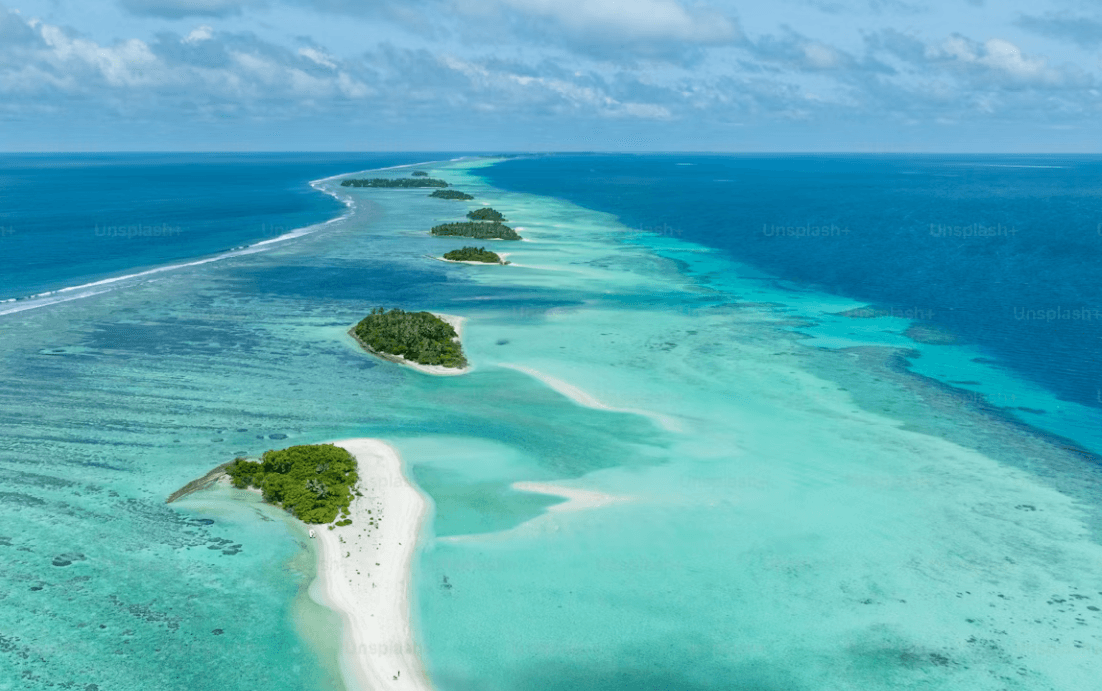 Image by Maldives Atolls
Maldives Liveaboard: The World's Most Booked Dive Safari
The Maldives is an archipelago of 26 atolls scattered across roughly 900 km of the Indian Ocean. There is almost no land — the highest point in the country is approximately 2.4 metres above sea level. The consequence for divers is significant: there is effectively no shore diving. The reefs are in the middle of open water, connected by channels and currents that flush nutrients from the deep ocean. To dive them properly, you need to be on a boat that moves with you.
That is why the Maldives liveaboard scene is so developed. It ranges from local dhoni-style wooden boats, which offer no-frills berths and are staffed entirely by Maldivian crew, to full luxury floating resorts with en-suite cabins, gourmet food, and dive guides who have spent decades learning the atolls. Trips typically run 7 to 10 nights.
Key atolls and what they offer:
- North and South Malé Atoll — the most accessible, with classic thilas (submerged pinnacles) like Banana Reef and HP Reef. Good year-round. Best for first-time Maldives visitors.
- Ari Atoll — the main zone for whale shark encounters. Whale sharks are present year-round here, but sightings peak from January to April. Manta rays also aggregate at cleaning stations throughout the atoll.
- Baa Atoll (UNESCO Biosphere Reserve) — home to Hanifaru Bay, one of the world's most famous manta aggregation sites. During the Southwest Monsoon (June to November), hundreds of manta rays and whale sharks feed in the bay simultaneously. It is one of the most spectacular marine wildlife events accessible to recreational divers anywhere on Earth.
- Addu and Fuvahmulah (southern atolls) — more remote, less visited. Fuvahmulah is famous for tiger sharks and thresher sharks in the channel. Hammerheads are seen at certain sites in the south.
Best time to visit: December to April brings the Northeast Monsoon — clear skies, calm seas, excellent visibility (often 30 m+), and warm water around 28–29°C. June to November is the Southwest Monsoon — rougher at times, but this is when Baa Atoll's manta aggregations peak. Many operators shift routes seasonally to follow the best conditions.
The Maldives is one of the few liveaboard destinations where a diver with an Open Water certification can realistically get the most out of the trip. Currents can be strong at the thilas, but experienced guides manage the dives well and will point less experienced divers toward appropriate sites.
Mergui Archipelago Liveaboard: Myanmar's Pristine Wilderness
The Mergui Archipelago is one of the least-visited dive destinations on Earth. Around 800 islands — most of them uninhabited — stretch along Myanmar's Andaman Sea coastline. The indigenous Moken people, sometimes called Sea Gypsies, have lived on these waters for centuries. The reef systems here are in the condition the Maldives was in fifty years ago: largely untouched, with coral coverage that is genuinely rare in the modern world.
Underwater, Mergui rewards the patient diver. This is not a destination for wall-to-wall pelagic action. The appeal is intimacy: leopard sharks resting motionless on sandy bottoms, seahorses clinging to sea fans, an extraordinary diversity of nudibranchs, and enormous barrel sponges that suggest reefs left entirely to their own devices. Whale sharks and manta rays appear, but they are a bonus rather than the main draw.
Logistics: Most liveaboards depart from Kawthaung on the Myanmar side, or from Ranong in Thailand — the two towns sit across a narrow border river from each other. Crossing into Myanmar for liveaboard purposes is routine for operators, and the boat typically handles the entry permit (a Myanmar Tourism permit, not a standard visa). Budget an extra day on either side for the border crossing and any bureaucratic delays. For a full site-by-site breakdown of Black Rock, Western Rocky, and the offshore seamounts, read our dedicated Myanmar Mergui Archipelago & Burma Banks liveaboard guide.
Best time: November to April. The monsoon season (May to October) makes the Andaman Sea uncomfortable and some itineraries impossible.
Honest note about Myanmar in 2026: The political situation following the 2021 military coup remains unstable. Operators — most of whom are Thai-registered businesses working legally in Mergui under permit — have continued to run trips throughout, and the archipelago itself is remote enough to be largely insulated from events in Yangon or Mandalay. That said, you should check current travel advisories from your home government before booking. Some operators offer flexible cancellation policies specifically because of this uncertainty. The diving is worth monitoring; the situation is worth monitoring equally.
Sri Lanka Liveaboard: Blue Whales and Colonial Wrecks
Sri Lanka sits at the confluence of two monsoon systems, which means dive conditions vary significantly by location and season — but it also means there is almost always somewhere good to dive. The liveaboard scene is smaller than the Maldives, but it is growing, and the underwater landscape is genuinely distinct.
The headline attraction is blue whales. The waters off Trincomalee on the northeast coast — particularly from February to April — offer some of the best blue whale encounters anywhere on the planet. These are not distant flukes glimpsed through binoculars. Snorkelling or diving alongside blue whales, the largest animals that have ever lived, is a different category of experience.
Trincomalee also has excellent wreck diving. The harbour was a major British naval base, and several WWII-era wrecks lie in diveable depths. The British Loyalty, an oil tanker torpedoed in 1942, sits in about 30 metres and is now encrusted with hard and soft coral. The Dutch Bay wrecks add more depth to the historical picture.
The south and west coasts offer reef diving — colourful and diverse, with good macro life. Conditions here depend on the Southwest Monsoon: the south is best from November to April, while the northeast flips that seasonality.
Honest note: Sri Lanka liveaboards can encounter rough seas, particularly during transitional monsoon periods. The blue whale season coincides with the tail end of the Northeast Monsoon, and seas can be choppy offshore. This is not a destination for divers who are prone to seasickness and haven't managed it before. Come prepared.
Okinawa Liveaboard: Japan's Subtropical Diving
Okinawa is not a destination most divers think of first. That is part of its appeal.
Japan's southernmost prefecture is a chain of subtropical islands stretching toward Taiwan. The Kerama Islands, just west of the main Okinawan island, have water clarity that the Japanese government has officially designated as a protected natural asset — "Kerama Blue" is an actual classification. The coral reefs here are healthy and diverse, with sea turtles, reef sharks, and good fish density.
Further southwest, Yonaguni Island sits just 110 km from Taiwan and offers two very different draws. In winter (January to March), hammerhead sharks aggregate in the channel currents — sometimes in groups of dozens. The site rivals the best hammerhead locations in the world, and it is dramatically undervisited by international divers. Yonaguni is also home to the Yonaguni Monument: a series of massive, angular stone formations on the seafloor that some researchers believe are man-made, possibly remnants of a lost civilisation. The scientific consensus is inconclusive, which makes it all the more interesting to dive.
Best time: April to June and September to October offer the best balance of calm seas and warm water. Typhoon season runs roughly July to September; hammerheads at Yonaguni peak in winter but the crossing from the main island can be rough in January and February.
Planning note: Japan requires more logistics than most Asian dive destinations. Domestic flights, ferry schedules, and dive operator availability all need to be coordinated in advance. The payoff is a destination where you are unlikely to encounter dive boat traffic. Pair it with time in Naha or further afield in Japan and the trip becomes something entirely different from a conventional dive holiday.
Red Sea vs Asia: How They Compare for Liveaboards
Both regions are world-class, but they reward different priorities.
The Red Sea excels at wrecks, dramatic walls, and accessible logistics. Egypt's dive sites are well-mapped, operator standards are mature, and the concentration of iconic dives within a small area (Sharm, Hurghada, Marsa Alam) means you can pack a lot into one trip. Our liveaboard diving guide covers the Red Sea in detail.
Asia — particularly the destinations in this article — tends to excel at biodiversity, pelagic encounters, and remoteness. A Maldives liveaboard will show you more manta rays and whale sharks than almost anywhere else. Mergui offers a wilderness experience the Red Sea cannot match. Sri Lanka's blue whale encounters are unique on a global scale. Japan offers cultural depth alongside genuine underwater surprises.
If you have done the Red Sea and want something categorically different, Asia is the natural next step.
Best Time of Year for Asian Liveaboards
Maldives
- Dec–Apr: Northeast Monsoon. Best visibility, calmest seas. Whale sharks in Ari, reef diving everywhere.
- Jun–Nov: Southwest Monsoon. Baa Atoll manta aggregations peak (especially Jul–Sep). Some rougher crossings.
Myanmar (Mergui Archipelago)
- Nov–Apr: Only viable season for liveaboards. Calm Andaman Sea, excellent visibility.
- May–Oct: Monsoon season. Most operators suspend trips.
Sri Lanka
- Feb–Apr: Blue whale season off Trincomalee. Best for northeast coast.
- Nov–Apr: South and west coast reef diving.
- Avoid transitional monsoon months (May, Oct) unless your operator has planned around them.
Okinawa / Japan
- Apr–Jun and Sep–Oct: Best overall conditions. Calm, warm, clear.
- Jan–Mar: Hammerhead season at Yonaguni. Cold (22–24°C), sometimes rough crossing.
- Jul–Sep: Typhoon risk. Some operators still dive, but check forecasts carefully.
Certification and Experience Requirements
The Maldives is accessible to Open Water divers, and many operators actively welcome beginners. That said, an Advanced Open Water certification gives you access to deeper sites and makes current management significantly easier — it is worth having before you go.
Mergui Archipelago is best suited to Advanced Open Water divers and above. Currents can be unpredictable, the diving is often in remote locations with no quick abort option, and the best sites require comfort at depth.
Sri Lanka's blue whale encounters are mostly conducted as snorkelling or shallow dives, so certification level matters less for that specific experience. For wreck diving and reef diving in current, Advanced is the appropriate baseline.
Yonaguni's hammerhead dives are conducted in open-water current conditions. Advanced certification and previous experience in current diving are strongly recommended. The Yonaguni Monument itself is accessible to Open Water divers in calm conditions.
For any unfamiliar dive environment — especially liveaboards in remote areas — being a confident, relaxed diver matters more than the specific cert on your card. If you are still working on buoyancy and air consumption, a liveaboard is a great environment to improve, but choose a destination and operator that caters to mixed experience levels.
How Much Does an Asia Liveaboard Cost?
Prices vary significantly by destination, vessel, and cabin type. These are approximate ranges per person per night based on double occupancy in a standard cabin:
- Maldives: $200–$500+/night. Budget dhoni-style boats start around $200; mid-range vessels with nicer cabins and equipment run $300–$380; luxury boats with dive guides, better food, and more spacious cabins push $450–$600+.
- Myanmar (Mergui): $150–$250/night. The market is smaller, vessels are mostly mid-range quality, and prices reflect the added complexity of permits and logistics.
- Sri Lanka: $100–$200/night. The liveaboard scene is less developed, which keeps prices lower. Quality varies — research operators carefully.
- Okinawa / Japan: $200–$300/night. Japanese operating costs (labour, fuel, port fees) keep prices higher than neighbouring Asian markets. Quality is generally excellent.
Factors that drive price up: newer vessels, more spacious cabins, nitrox included, smaller group size, longer transfer distances, and higher crew-to-guest ratios. Factors that drive price down: older boats, shared cabins, shorter trips, and booking in shoulder season.
For tips on what to look for when comparing operators, see our guide on planning a dive trip.
Final Thoughts
The Maldives is the right choice if you want the best possible pelagic diving — whale sharks, manta rays, and reef sharks — with reliable logistics and a range of budget options. It is the most forgiving of the destinations here and the most rewarding for photographers.
Mergui suits the diver who values remoteness above all else. The wildlife is not as reliably spectacular as the Maldives, but nowhere else in Asia offers this level of untouched reef. Come for the wilderness, not the checklist.
Sri Lanka is the destination to choose if blue whales are a bucket-list item and you want to combine that with historical wreck diving. The liveaboard infrastructure is still maturing, so vet your operator carefully.
Okinawa is for the diver who wants to combine a serious underwater experience with a culturally distinct destination. The hammerheads at Yonaguni are underrated on the global circuit, and the logistical challenge is a feature rather than a bug for travellers who enjoy independent planning.
All four destinations reward divers who do their homework before boarding. Check our Southeast Asia liveaboards article if Indonesia, the Philippines, or Thailand are also on your radar — and the liveaboard diving guide for everything you need to know about choosing and preparing for a live-aboard trip.
Frequently Asked Questions
What is the best time to do a Maldives liveaboard?
December to April (Northeast Monsoon) offers the best visibility and calmest conditions for diving across most atolls. If manta rays are your priority, June to November — especially July to September — is when Baa Atoll's Hanifaru Bay aggregations peak. Many divers who want both whale sharks and mantas choose the transitional months of November or May, when conditions are acceptable and both species can be present.
Can beginners do a Maldives liveaboard?
Yes. Many Maldives liveaboards actively cater to Open Water divers and even offer discover scuba experiences. The key is choosing a boat with dive guides who will assess conditions and select appropriate sites. Avoid booking a trip marketed as a "current and pelagic" itinerary if you are a new diver — those routes prioritise advanced sites. A general North/South Malé or Ari Atoll itinerary is perfectly manageable for beginners.
Is a liveaboard the only way to dive the Maldives properly?
For reaching the best sites, yes. Resort diving exists on most inhabited islands and some of the larger resort islands have decent house reefs. But the Maldives' most iconic sites — the hammerhead channels, the manta cleaning stations, the offshore thilas — are only consistently accessible by safari boat. A resort holiday and a liveaboard trip are fundamentally different Maldives experiences.
How do I get a permit for the Mergui Archipelago?
You do not need to organise this yourself. All licensed Mergui liveaboard operators handle the Myanmar Tourism permit as part of the booking. The permit covers your entry into the archipelago zone and is typically arranged through the operator's local contacts in Kawthaung or Ranong. Verify before booking that your operator is licensed and that the permit fee is included in the quoted price — some operators list it as a separate surcharge.
Is Japan good for liveaboard diving?
Yes, but it is a niche market. Okinawa's liveaboard scene is small compared to the Maldives or Indonesia, and most international divers are not aware it exists. The Kerama Islands offer excellent reef diving year-round, and Yonaguni's hammerhead aggregations in winter are genuinely world-class. If you want a liveaboard experience combined with Japan's broader travel appeal — food, culture, infrastructure — it is a compelling combination that very few dive travellers have done.
Related articles
- Myanmar Liveaboard Diving: Mergui Archipelago & Burma Banks Guide
Plan a Myanmar liveaboard expedition to the Mergui Archipelago and Burma Banks: Black Rock, Shark Cave, Ranong border logistics, best season, and costs.
- PADI Liveaboard Diving: The Best Destinations Worldwide
Discover what liveaboard diving really involves, who it suits, and the world's top destinations for a PADI liveaboard trip — from Raja Ampat to Socorro.
- Best Liveaboards in Southeast Asia: Indonesia, Philippines, Thailand
Raja Ampat, Komodo, Tubbataha Reef, and Similan Islands. Explore them as liveaboard diving destinations. Get to know the best seasons and trip costs.
- Scuba Diving Trips & Destinations: How to Plan the Perfect Dive Vacation
Scuba diving trips combine travel and underwater exploration. Learn how dive travel works, where to go, and what to expect at top diving destinations worldwide.
- Advanced Open Water Diver Certification: Complete Guide to Deeper Diving
The PADI Advanced Open Water Diver certification strenghten your diving skills and allows you to explore deeper dive sites (30m/100ft). You must have completed the Open Water Diver certification first.